Sunday, 4 November 2018

THE CALL OF THE COCKEREL

My first reaction as I walked out on the terrace of Pousada de San Teotonia in Valença, Portugal was to shout "Stop! Hold this moment forever!"  It was one of those matchless moments I will treasure for a lifetime. I live above material interests and value aesthetically pleasing and diverse scenery, legendary tales and medieval allegories much more than a glass slipper and a red-carpet event. I marvel at old world charm and stories of yesteryear. 

The historical gem that Valença is, nestled on the banks of the slow-flowing Minho River with its centuries’ old fortress, chapels and statues, bustling plazas and a metallic railroad bridge brought a mystifying fascination over me.

Previously known as Contrasta, Valença was declared a city in 1262 and embraces centuries of preserved history, undefeated conquests and bloody wars dating as far back as the time of the Roman Empire.

Although the rooster or Galo de Barcelos is not the official symbol of Portugal it is definitely the most  recognised.  There are different explanations as to how it became such a popular symbol in the Portuguese culture. It symbolises honesty, integrity and trust - all qualities I value deeply and naturally relate to.  

After a refreshing glass of Vermu (Vermouth) and Mediterranean olives at the Pousada de San Teotonia, the fortress was our first stop. Fortaleza de Valença do Minho is a top tourist attraction of this lush green 17th century city. It is regarded as one of Europe’s key military fortresses and is quoted as being ‘a true legacy of human kind.’

This star-shaped fortress was built in the 13th century in classic Vauban style and served as a military stronghold during many battlements between Portugal and Spain.  The last military forces only left the fortress as recently as 1927.

The Eifel Tower-inspired Ponte International Bridge that connects Spain with Portugal dates back to 1879 and is still in use, although a more modern bridge was built in recent years. While many tourists find it compelling to walk across the bridge to Spain, we opted for a leisurely stroll in this ancient city.

Like so many cities and towns in this part of the world, the heart of Valença hosts historical structures and cobble stone streets whereas the Rua de Mousinho de Albuquerque street in the new part of town is abuzz with activity. High quality yet affordable textiles and curios draw tourists and Spaniards to the flourishing vendors of Valença.

For me, no trip to any town or city is complete without a visit to a cathedral, church or monastery. The baroque style Igreja de Santo Esterado with its near-modern interior, hosts an image of the Baby Jesus being breastfed by his mother, which is considered very unusual for Portuguese art. The southern part of Valença is somewhat quieter and not as tourist-swamped. This is where we came across another rococo (late baroque) style chapel. Capela do Bon Jesus, with the statue of San Teotonio (the first Saint of Portugal) on its doorstep is worthwhile of a visit. 

The citizens of Valença are cat lovers, or so it seems. These felines’ favourite hangout place is at the Largo de Santa Maria dos Anjas plaza. They are not out to impress or wield power – just lazing in the midst of a tourist maelstrom and watching the world go by.

As we head back to Spain with our souvenirs and a Vermu glow on the cheeks, leaving behind the land of the brightly coloured roosters, the bacalau and its glorious history, I was mindful of my own individual journey through life. I realised my life’s journey might never take me back to Valença, but I know the place certainly occupies a front seat in my heart.

Despedida Valença!!


GALLERY


A ROOSTER SOUVENIR


Aerial view of the Fortress


Walls of the Fortress


Walls of the fortress


The Fortress

Retail Outlets


Shops next to the Chapel


Sao Teotonio's statue in front of Capela do Bom Jesus

Gardens


Textiles on sale


Municipality Valenca

Cobble stone streets and vendors

Igreja de Santo Esterado

Valenca's cats

Fat Cat of Valeca

Pousada de San Teotonia

Statue of Rooster

Pitstop 

Spain on the other side of the Minho River


The River,  the Bridge and Tui, Spain


vermu and olives


Sunday, 21 October 2018

A QUEEN FOR A DAY


The nearest I’ve ever been to a real palace was when I was staring through fortified gates hoping to get a fleeting glimpse of one of the British royals. The guards on duty at Buckingham Palace possess little to no sense of humour and an innate lack of emotion.  My devious attempts at gaining information from them about the Queen and her family’s whereabouts were all in vain. So when I learned that we were going to visit the Brejoeira Palace in Monçâo, Portugal, I felt a certain vertigo of excitement to revive my fascination with all things royal.

This 19th-century neoclassical style palace, built by Luis Pereira Velha de Moscosa was declared a national monument in 1919 already but only opened its doors to the public in 2010.  The walled-in Brejoeira confidently boasting its imposing main gate is a protruding local landmark. The gardens indulge its typical English influence and are always kept in an absolute pristine condition.  Eighteen hectares of vineyards, a lake or two, a forest and statues of mythological figures are positioned all over the area.

Unfortunately, visitors are not allowed to take photos once inside the palace. Another disappointment was the absence of an English tour guide. For me and many non-Portuguese or Spanish visitors in our group, it was a bit of a discouragement and undeniably curbs your enthusiasm.

However, in true flair only a palace can deliver, the enormous halls, the impressive staircase, and wooden ceilings are opulently decorated with tapestries, exquisite furniture and imperial decorations accumulated over the years.  Walking through the palace I envisaged how the who’s who of Portugal’s famous elite spent their moonlit nights attending a social gathering or gala evening at the palace.  I imagined ladies all dressed in satin and silk and men in black tailcoats and white waistcoats with an air of authority and confidence, enjoying the hospitality of the masters and mistresses of the palace.  Submerging myself in all the opulence and lavishness around me was rewarding indeed and I was left mesmerised.

The wine has always been cultivated right there on the grounds, but mainly for personal use or was sold to local retail outlets.  The Palacio da Brejoeira brand was only launched in 1976 by Mrs. Dona Maria Herminia d’Oliveira Paes, the owner of the palace at the time, who also spearheaded the production of their own wine.

The palace changed hands numerous times since it was built in 1805 and at times has been very neglected, bankrupt and almost ruined.  Luckily Councilor Pedro Maria de Fonseca Araujo bought the palace at the start of the century and undertook major restoration of the property.

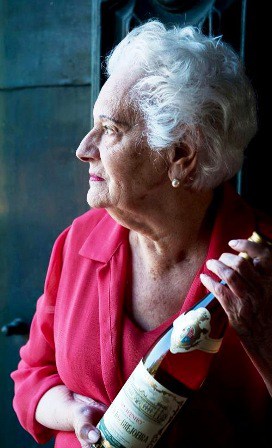
In 1937 Comendador Francisco d’Oliviera Paes bought the palace for his daughter Maria Herminia d’Oliveira Paes, who occupied it until her death in December 2015 at the age of 93.  She was the main driver behind the production of the wine that is distilled on the property until today.

Walking on the red carpet up that beautiful staircase of the Palace Brejoeira I realised something.  Even though the palace was never occupied by kings and queens, I felt regal on that glorious day.   Like the queen of my own castle.  I was ready to explore the rest of the region with my very own king by my side.


FRONT VIEW OF PALACE


THE ENTRANCE GATE

THE STAIRCASE (photo courtesy the palace)


LEFT WING OF PALACE

RIGHT WING OF PALACE


GARDENS


MARIA PAES (photo courtesy the palace)


Sunday, 7 October 2018

WHERE THE DEER REIGNS

It was high summer in Portugal. My African skin and soul were in need of sun and heat after a couple of rainy days in Galicia.

My knowledge of Portugal has always been limited to the little I was taught in the history class at school. Bartolomeu Dias and Vasco de Gama and a few Portuguese friends in the neighbourhood was the extent of my knowledge of this remarkable country bordering the North of Spain.

Our first stop in Portugal was at The Abrigo Das Andorinhas (The Shelter of the Swallows), a charming restaurant situated in the historical centre of Vila Nova de Cerveira. The service at the restaurant was professional and the regional food served outstanding.

My persuasive host, also a worldly food connoisseur, suggested that I try my first traditional Portuguese bacalhau (dried cod). Although I am a seafood lover, the salted dried fish on display in some of the food markets did nothing for my taste buds and I was hesitant to try it.

The bacalhau is traditionally served with potato, lots of olive oil and rustic bread. As a side, we also ordered bolinhos de bacalhau (fried fish cake), another Portuguese delicacy, which I did not really like. Of course, a refreshing glass of local wine was added to compliment this fish feast. Although bacalhao is not native to Portugal the Portuguese are passionate about it. The dried fish is imported from Norway and Newfoundland. A popular saying that the Portuguese know 365 ways to cook bacalhau, one for each day of the year, is not far from the truth.

Hunger pains gone and bodies refreshed and we were ready to explore this delightful settlement. Vila Nova de Cerveira, hidden in the Miňho valley, is surrounded by mountains and a lush countryside. The town is a gem with age-old buildings rubbing shoulders with modern-day statues and sculptures. The town’s rich history and culture date back hundreds of years. It was founded in 1321 by King Denis of Portugal who ordered his men to build the Gothic style castle, which today is still the most important and imposing landmark of the town.

Legend has it that the gods of Olympus crowned a deer (cerveira) as king and he, with fellow stags (deers), settled on the banks of the Miňho river, which became known as Terras de Cerveira (land of the stags). Conflict and clashes followed and the only living stag that remained was the king. During a clash with a Spanish nobleman, the latter was killed and the king stag kept the nobleman's banner as a trophy. Today the stag, as well as the banner, are incorporated in their coat of arms and the deer features all over town in statues and curio and art shops.

My love for European churches, monasteries and cathedrals brought us to the 16th-century Baroque style Igreja Matriz,(Church of St Cyprian). The church, in the main plaza of the town, was designed by Verisimo Barbosa. Its immaculate interior decorated with beautiful fresh flowers and mass music in the background soothes a weary traveller.

We were lucky in that the town was a flurry of activity because the townspeople were in the process of preparing for the upcoming Crochet Veste com Arte Festival (Crochet Festival. It offered interesting art and curio shops, sprightly and cheerful street cafes, exquisite crochet work and colourful overhead umbrellas. The festival had turned this utopian town into a flamboyant euphoria for us to soak in.

I stood in awe in front of one of the houses fully covered with crocheting and I wondered how many hours must have gone into such a masterpiece. Every stitch crocheted with love. Every stitch flawlessly positioned in place.

It was with sadness and these words of Chief Seattle in mind that I bid the vila farewell:  “Take only memories, leave only footprints.”  My footprints lay scattered all over Vila Nova de Cerveira, and my memories are safely stored in my mind.


COAT OF ARMS


THE MIGHTY MINHO


BACALHAU OND DISPLAY


BACALHAU SERVED WITH POTATOES AND BREAD


THE CASTLE


THE CHURCH

CHURCH INTERIOR


STATUE OF THE STAG

SCULPTURES IN TOWN GARDEN


THE TOWN PLAZA

THE STAG


OVERHEAD UMBRELLAS


STREET CAFES


ADVERTISING THE CROCHET FESTIVAL


CROCHET WORK


A CROCHET MASTERPIECE
ENTIRE

Thursday, 27 September 2018

FROM VIGO TO VALENҪA AND ALL THE VILLAS IN BETWEEN

Crossing borders always excite me so much so that contentment tiptoes straight to my heart. Entering a country for the first time makes me silly with delirious anticipation. The borders between Spain and Portugal are not only one of the oldest but at 1214 km (754 miles) also the longest in Europe. Thrill seekers can even opt to cross the border with a zip-line! 

I never feel comfortable in a vehicle traveling on the ‘wrong’ (right) side of the road, but my road trip from Spain to Portugal went astonishingly well.  My host/tour guide/translator and historian was a chivalrous driver and although my heartbeat and blood pressure rose to dangerous levels many a time, we arrived in one piece back home.

Our first stop of many that day was at La Villa de Oia- mostly to visit the centuries-old Royal Monastery of Santa Maria de Oia.  It is the only monastery in the Iberian Peninsula that borders the ocean and overlooks the harbour with its spectacular views. A marvel not to be missed! 

Sadly, the monastery is now privately owned and not open to the public.  Signs of neglect and decline are visible and it is in desperate need of rejuvenation to restore it to its former glory. However, the adjoining church is still open for the public to enjoy.

The building of this Cistercian monastery started in 1185 but was only finished in the 18th Century.  Roman and French influences are evident in its architecture. It was listed as a Historic-Artistic monument in 1931 and the site has also been declared a ‘Site of Cultural Interest’ and is one of Galicia’s points of pride. A hidden gem indeed!  There are strong indications that the monastic herbal garden belonged to the Cistercian monks who initially occupied the monastery. The present owners are currently in the process of restoring this garden back to its rightful glory.


Monastery de Oia


Monastery de Oia


Monastery de Oia


Monastery de Oia


Monastery de Oia


Galicia is still not declared an official Celtic nation but the remains of the Castro (fortified Iron Age settlement) at Santa Tregas is proof of just how deep the nation’s Celtic roots run. 

Tourists from all over the world flock to A Guarda, the city nominated by the European Commission as a European Destination of Excellence (EDEN) for their role in tourism.  The Monte de Santa Trega settlement and museum situated on the Santa Trega Mountain, form part of A Guarda's uniqueness.  It struck me that many of these settlements were built on mountains and hills, always close to the coast. 

Although only 341 meters above sea-level, the walk to the top was steep and the brisk breeze unpleasant.  But the view from the top was breathtaking and worth the walk.  The Atlantic Ocean, the Miňo River (dividing Spain and Portugal) and the villas from up there was a sight for sore eyes indeed. It is believed (or from what I could understand) that only 50% of the Santa Trega remains have been reconstructed and is still a work in progress.  Once inside it reminded me a great deal of the rural huts in South Africa.  There are no windows in these circular stone dwellings and the roofs are covered with grass.  Each house is equipped with its own fireplace. Metal and copper tools, as well as ceramic artifacts, are on display inside the reconstructed houses. These communal dwellings are proof that families co-habited long before us.

Part of me always wants to linger a little longer in places of magic and imagination but Portugal was waiting and I was starving and in desperate need of food.    "¡Tengo hambre!" was a phrase I often used.


SANTA TREGA


BREATHTAKING VIEWS


RECONSTRUCTION IN PROGRESS


MAP


WORK IN PROGRESS


A RESTORED DWELLING


THE VIEW FROM THE TOP


Striking a pose! .


Featured post

FRIENDS 4/70

Friendship is one of life’s most cherished possessions. When it perseveres through the test of time, through decades of development, transfo...