Friday, 10 May 2019

ON MY DOORSTEP


We seem to forget that travelling does not necessarily mean visiting far-far-away countries or exotic hide-aways.  And although some people claim it is an overstatement to say 'travelling broadens your horizons', for me, I can honestly say it broadened my mind in so many wonderful ways.  Some of the journeys I’ve taken have changed my perspective of many dogmas and ideologies, and I daresay showed how narrow minded I may have been.

After a year of not being able to drive my own car it was about time to hit the tar.  Not only was it catch-up-over-coffee-time with a dear friend of mine, but discovering new gems and exploring the fertile valley of the Langkloof  simply an essential action, a sine qua non.

Don't be fooled by the tranquility of the small towns and surrounding countryside.  There are lots to do!  Catering extensively for the 4 x 4 adventure drivers, dirt roads will take you into the rugged mountain area, which is ablaze with wild-life, fynbos and flowers, aloes and succulents and is the natural habitat of our national flower, the Protea.

Hiking trails are represented in abundance, most popular of all is the Formosa Peak, 1665 meter above sea level. It is not recommended for the inexperienced hiker as it is a 20 km trail up and back down the peak with breathtaking views of the valleys below.  It is best to start your Formosa hike as early as possible as it can take up most of your day and the weather can change instantly from extreme heat to fog and poor visibility.

Joubertina is located in the Sarah Baartman District of the Eastern Province of South Africa, and was founded in 1765.  It was named after W A Joubert who was a minister of the Dutch Reformed Church from 1878 till 1893.  Today the roughly 6,000 inhabitants all live in harmony on the banks of the Wabooms River.

The region is famous for apple, pear and peach farming and during picking season the area is abuzz with activity as the friendly farmers, ready their crops for export.  And yes, the region's true charm is the friendliness of its people and especially the farmers.  During harvesting the fragrance of ripe fruit fills the air and the tranquility of rural life temporarily disturbed.

Neighbouring towns, like Krakeel River, Louterwater, Misgund, Two Rivers, Assegaaibos and Kareedouw are just as captivating and although you travel on dirt roads once you leave the R62 it is worth every effort.

Krakeel River is a mere 13 km. west of Joubertina.  Matthys Strydom bought the original farm in 1770 and today many Strydoms still occupy the land as the original farm was divided between the ten Strydom sons.

After a splendid lunch at the Diner 62, it was time for one more coffee with a friend and then off to my overnight stay in Twee Riviere. 

Twee Riviere (translating to 'two rivers') nestles in the shades of the Baviaans, Kouga and Tsitsikamma mountain ranges where two rivers (the Diep River and the Dwars River) run through the town.

Although it can be described as one of the Eastern Cape’s hidden secrets it is home to The South African Institute of Heritage Science and Conservation Campus and the very popular Belfry Kitchen that forms part of the SA Institute for Ceramic and Metal Restoration.  A visit to this institute will however have to stand over until another time as the day was nearing its end and  it was time to get a good night’s rest.

Anita, the owner of the lovely Protea Ridge guesthouse made me feel at home and it was good to have only the smell of the country up my nose and the twittering and tweeting of the birds in my ears.

My journey back home was slow and leisurely as I wanted to drink in the last bid of this unhurried splendour that surrounded me.

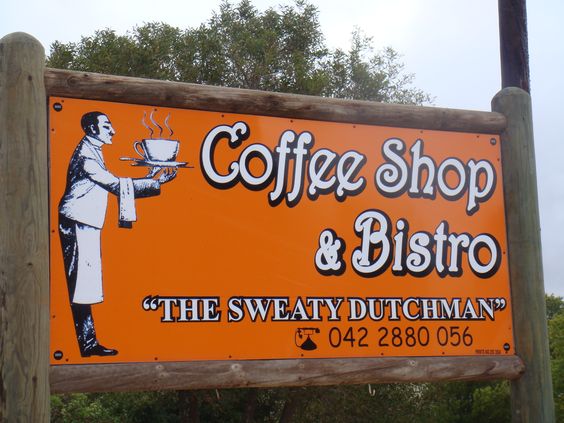
A quick breakfast stop at the Sweaty Dutchman in Kareedouw, where the not-so-sweaty Dutchman attends to his guests in true Dutch hospitality, was just what I needed that early in the morning.  I wholeheartedly recommend his pancakes.

As I passed the Van Staden Gorge with its 140 meter-high, arch-like bridge my thoughts went to all who have lost their lives on the Bridge of Death, as it is known.  The bridge was opened in 1971 and 12 days later claimed its first suicide victim.

But on a more positive note - I ended my journey with a song in my heart, knowing that I am living the best years of my life.  Life is all about an attitude for gratitude!


Random photos of the Langkloof


PROTEA S A NATIONAL FLOWER

KING PROTEA 


Wednesday, 30 January 2019

PILGRIMS ON THE RISE

Cathedral Santiago de Compostela
Photo Credit :  Patricia Caetano
I was hesitant to blog about Santiago de Compostela. Can one do this legendary and world-renowned city with its great history, authentic ambiance and medieval architecture enough justice? But then I’m reminded that the story is in the eye of the beholder. This is my unique experience of this beautiful city….

From the moment I arrived by train until the day I traveled back on that same train I was overwhelmingly and profoundly amazed. A city that is not only known for the almost 800 km pilgrimage to the Tomb of St James, but also for the majestic Cathedral which is the focal point of the Plaza do Obradory. This beautiful cathedral was built in 1075 during the reign of Alfonso VI. Major renovations were in progress at the time of my visit and some areas were closed to the public. It is believed that the remains of St James were brought from Jerusalem and buried in the city of Santiago de Compostela.

The city is the capital of Galicia, Spain and located in the Province of Coruna. In 1985, the site where the Cathedral is built was declared a UNESCO world heritage site. This is just one of Spain’s countless world heritage sites, a testament to the rich culture that the Spanish history embodies. 

As far back as the 9th century, pilgrims traveled this famous route and today over 20,000 pilgrims annually flock to Portugal and Galicia to traverse this historical walk.  Whether they do it for religious reasons, as part of a soul-searching process or just for fun, the Camino is popular and a bucket list item of many! Without a doubt this kind of ‘religion-tourism’certainly boosts the economy of Santiago, and the whole region for that matter.

The city, like so many of Galicia’s cities and towns, has a character-filled older part (Zona Vella) and a vibrant, modern part (Zona Neva) where shopping centers and retail outlets rub shoulders with trendy tapas bars and chic hotels.

Zona Vella, with its granite streets, narrow alleys and beautiful Gothic arches and Romanesque plazas dating back centuries, leaves an impact on every visitor to this ‘Big Village’as Galicians referred to their city.  I fell in love with the vibrancy of the street cafes, and how the street musicians and entertainers put their own unique talent on display.

An English guided tour to the Cathedral’s rooftop is an experience not to be missed. Although the climb is not for the faint-hearted the view from up there is worth every effort. A well-informed and witty tour guide provided for a memorable excursion.


The highlight of a visit to the Cathedral is of course to experience the swinging of the Botafumeiro  (smoke expeller) ceremony and a Pilgrim's Mass. The swinging of the Botafumeiro takes place on most of the religious days on the Catholic calendar e.g. the Epiphany, Easter Sunday, Christmas and Mary's Assumption, to name but a few. The incense-filled censer swings from the central dome to the side naves and takes eight tiraboleiros (bell ringers) to move the bell, which weighs roughly 53 kg. Huge was my disappointment when the ceremony was not held on the day we found ourselves in Santiago. 

SWINGING OF THE BOTAFUMEIRO
Photo :  Unknown
But I did get to experience the daily mass, which takes place at noon and is attended by hundreds of visitors and pilgrims, both Catholic and non-Catholic from all over the world. The solemnity of the occasion was palpable and contrasted with the lavishly-decorated interior of the Cathedral. From the 17th century Baroque style altar and St James’s tomb, to the impressive Romanesque art work, statues, silver, gilt and marble all add to the splendor and opulence of this historically-rich Cathedral.

However, laying a hand on the 13th century statue of St James, for which late-comers must stand in line for hours (and feels a bit touristy) it is not to be missed when visiting the Cathedral.   Although I am not a member of the Roman Catholic Church, the moment (and a moment is all you are allowed by the stern guard on duty) I stood in front of the statue caressing the mantel of St James, I softly uttered a universal blessing in honor of all my Catholic friends across the globe. For that moment, it felt like the right thing to do – to behold a sacred, holy moment.

Santiago has so much to offer tourists like me or weary pilgrims alike. Although relatively small compared to cities across the globe, the entertainment is endless. From a stroll in the park where I misunderstood an offering from a Gypsy lady (to my embarrassment), to enjoying dishes such as the ever so popular pulpo de Gallega (octopus), padron peppers, Tarta de Santiago (sweet almond tart) and churros (deep fried choux dough pastry). The city’s energy by day and night alike is real and contagious.

After some serious souvenir shopping, with the Camino symbol (a scallop shell) around my neck and a berry red Rosary in my bag, an afternoon tea at the Casino Cafe was just what our sore feet needed. I felt homesick for a while when I discovered Rooibos Tea (redbush) on their menu. Rooibos tea originates from South Africa and has gained popularity across the globe. We are cultures and continents apart and here good old Rooibos tea features on a menu in a Spanish restaurant!

Endless options of entertainment await visitors after dark in Santiago. The colourful carnivals and age-old fiestas go on until the early hours of the morning. Choosing the perfect tapas bar becomes an interesting experience and quite a challenge as Spain has more bars per capita than anywhere in the world. Bar hopping with total strangers from across the globe turns out to be the most popular night time activity in this vibrant city. 

At this point, however, I will end my recount of my encounter with Santiago de Compostela, because whatever happens at Al Papatorio (a very popular tapas bar) and Santiago late at night, stays in Santiago. But I can quote the words of Richard R Niebuhr which perfectly rings true of me as I set on my journey: "Pilgrims are persons in motion -passing through territories not their own - seeking something we might call completion, or perhaps the word clarity would do as well, a goal to which only the spirit's compass points the way."


RENOVATIONS IN PROGRESS

ONE OF MANY BEAUTIFUL PASSAGE


CARESSING ST JAMES


RENOVATIONS IN PROGRESS AT THE CATHEDRAL

ROOFTOP VIEW


REACHING SANTIAGO

PILGRIMS ARRIVING


THE PALACE 

Plaza do Obradory

INSIDE THE CATHEDRAL


ROOFTOP VIEW

ROOFTOP 

PULPO ON DISPLAY 

STREET CAFE

THE CASINO RESTAURANT INTERIOR


ONE OF MANY TOMBS

TARTA DE SANTIAGO ON DISPLAY

TAPAS BAR

CHURROS

TAPAS


STANDING IN LINE FOR ST JAMES

MODERN BUILDINGS IN THE NEW PART OF THE CITY

NARROW STREETS AND ALLEYS


STREET ARTISTS


GIANTS 

CARNIVAL TIME


SCALLOP TOKEN OF THE CAMINO


Sunday, 4 November 2018

THE CALL OF THE COCKEREL

My first reaction as I walked out on the terrace of Pousada de San Teotonia in Valença, Portugal was to shout "Stop! Hold this moment forever!"  It was one of those matchless moments I will treasure for a lifetime. I live above material interests and value aesthetically pleasing and diverse scenery, legendary tales and medieval allegories much more than a glass slipper and a red-carpet event. I marvel at old world charm and stories of yesteryear. 

The historical gem that Valença is, nestled on the banks of the slow-flowing Minho River with its centuries’ old fortress, chapels and statues, bustling plazas and a metallic railroad bridge brought a mystifying fascination over me.

Previously known as Contrasta, Valença was declared a city in 1262 and embraces centuries of preserved history, undefeated conquests and bloody wars dating as far back as the time of the Roman Empire.

Although the rooster or Galo de Barcelos is not the official symbol of Portugal it is definitely the most  recognised.  There are different explanations as to how it became such a popular symbol in the Portuguese culture. It symbolises honesty, integrity and trust - all qualities I value deeply and naturally relate to.  

After a refreshing glass of Vermu (Vermouth) and Mediterranean olives at the Pousada de San Teotonia, the fortress was our first stop. Fortaleza de Valença do Minho is a top tourist attraction of this lush green 17th century city. It is regarded as one of Europe’s key military fortresses and is quoted as being ‘a true legacy of human kind.’

This star-shaped fortress was built in the 13th century in classic Vauban style and served as a military stronghold during many battlements between Portugal and Spain.  The last military forces only left the fortress as recently as 1927.

The Eifel Tower-inspired Ponte International Bridge that connects Spain with Portugal dates back to 1879 and is still in use, although a more modern bridge was built in recent years. While many tourists find it compelling to walk across the bridge to Spain, we opted for a leisurely stroll in this ancient city.

Like so many cities and towns in this part of the world, the heart of Valença hosts historical structures and cobble stone streets whereas the Rua de Mousinho de Albuquerque street in the new part of town is abuzz with activity. High quality yet affordable textiles and curios draw tourists and Spaniards to the flourishing vendors of Valença.

For me, no trip to any town or city is complete without a visit to a cathedral, church or monastery. The baroque style Igreja de Santo Esterado with its near-modern interior, hosts an image of the Baby Jesus being breastfed by his mother, which is considered very unusual for Portuguese art. The southern part of Valença is somewhat quieter and not as tourist-swamped. This is where we came across another rococo (late baroque) style chapel. Capela do Bon Jesus, with the statue of San Teotonio (the first Saint of Portugal) on its doorstep is worthwhile of a visit. 

The citizens of Valença are cat lovers, or so it seems. These felines’ favourite hangout place is at the Largo de Santa Maria dos Anjas plaza. They are not out to impress or wield power – just lazing in the midst of a tourist maelstrom and watching the world go by.

As we head back to Spain with our souvenirs and a Vermu glow on the cheeks, leaving behind the land of the brightly coloured roosters, the bacalau and its glorious history, I was mindful of my own individual journey through life. I realised my life’s journey might never take me back to Valença, but I know the place certainly occupies a front seat in my heart.

Despedida Valença!!


GALLERY


A ROOSTER SOUVENIR


Aerial view of the Fortress


Walls of the Fortress


Walls of the fortress


The Fortress

Retail Outlets


Shops next to the Chapel


Sao Teotonio's statue in front of Capela do Bom Jesus

Gardens


Textiles on sale


Municipality Valenca

Cobble stone streets and vendors

Igreja de Santo Esterado

Valenca's cats

Fat Cat of Valeca

Pousada de San Teotonia

Statue of Rooster

Pitstop 

Spain on the other side of the Minho River


The River,  the Bridge and Tui, Spain


vermu and olives


Featured post

FRIENDS 4/70

Friendship is one of life’s most cherished possessions. When it perseveres through the test of time, through decades of development, transfo...